
Integration of Reproductive Health Services
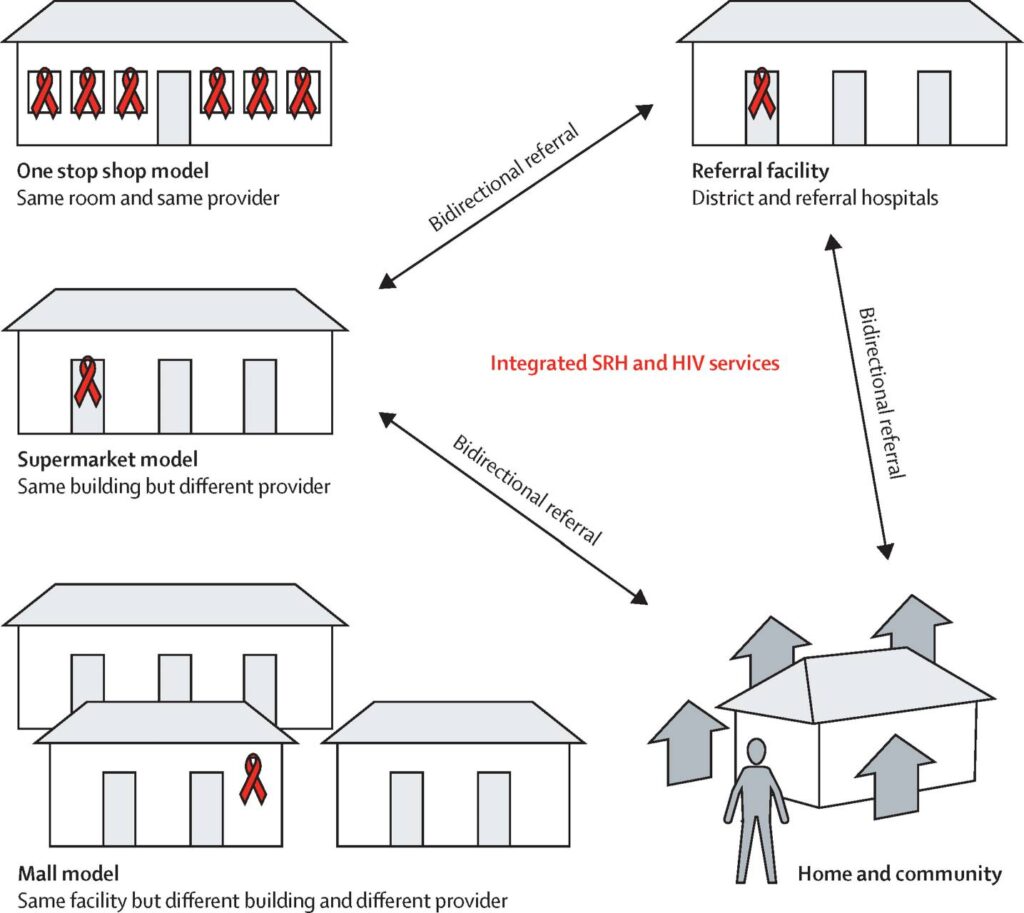
Integration of Reproductive Health Services (RHS) is a comprehensive healthcare approach where multiple health services are made available to clients simultaneously during a single visit. The ultimate goal is to provide a holistic, convenient, and cost-effective "One-Stop Shop" for clients, maximizing the use of available resources while dramatically reducing missed opportunities for healthcare interventions.
In this detailed module, we will explore the definitions, driving factors, immense benefits, core principles, and the various modes of delivering integrated reproductive health services in the community.
1. Definition and Concept of Integration
Integration in healthcare is not just a policy; it is a client-centered philosophy. It can be defined in several comprehensive ways:
- Holistic Approach: It is an approach in which healthcare providers proactively use opportunities to engage clients in addressing broader health and social needs, rather than solely focusing on the primary reason for the health encounter.
- Proximity and Accessibility: It is a phenomenon or process where several services are made available to clients or groups of people so that those needing specific Reproductive Health Services (RHS) can access them within their immediate vicinity (e.g., offering Family Planning alongside Safe Motherhood and Cervical Cancer Screening).
- Consolidation of Services: It is the process of providing a wide variety of RHS by either one or more competent service providers within one single facility on a daily basis.
- Resource Maximization: In order to maximize the use of scarce resources, Sexual and Reproductive Health Services (SRHS) should be provided as an integrated health care package that is highly convenient for both clients and service providers. Clients must be able to receive/access various SRHS during one single visit at a given static facility or outreach health unit.
Integration provides an anticipatory assessment. It helps providers plan and evaluate services strictly relevant to the client’s actual desires, current needs, and potential future risks.
⚠️ Attention: The "One-Stop Shop" Concept & Referrals
When an integration approach is applied, the primary goal is to meet more than one unique need during a single encounter. Services are offered at the same facility, during the same operating hours. If the needed services are beyond the capacity of the facility or the skills of the attending provider, an effective and timely referral system must immediately be effected. Coordinated care is useless without a strong referral backup.
2. Primary Reasons for Integration of RHS
Why do Ministries of Health and global health bodies heavily advocate for service integration? The reasons include:
- Simultaneous Availability: To make various critical services available at the exact same time, preventing the client from having to make multiple expensive trips.
- Geographical Reach: To help reach deeply remote communities who may not be able to frequently access distant RHS facilities.
- Specialized Assistance: To ensure people with specific, complex reproductive-related problems are immediately assisted, and those with complicated cases are swiftly referred for specialized attention.
- Community Awareness: To drastically create awareness, improve health-seeking behaviors, and increase the frequency and quality of community contact with healthcare providers.
3. Factors That Promote Successful Integration
For integrated services to run smoothly and sustainably, several foundational factors must be strengthened:
- Capacity Building (Training): This involves continuously improving the skills and ability of the already existing staff (e.g., training a midwife to screen for cervical cancer) and recruiting more skilled staff to counterbalance the increased workload.
- Improving Infrastructures: The government and developmental partners must improve transport and communication networks, as well as upgrade health centers and referral systems, to improve client turn-up and accessibility.
- Sustaining Commodities: Increasing the range of available commodities and ensuring their sustained availability. This is achieved through a constant, timely, and unbroken supply chain of RHS items to meet the overwhelming number of clients.
- Supervision, Monitoring & Evaluation: Constant and timely integrated supervision is required to rigorously ascertain the success of RHS programs and identify gaps immediately.
- Facilitating Effective Referrals: Establishing strong networks across services. This helps address clients who need specialized care, ensuring they are treated within the shortest time possible without being lost in the system.
- Community Sensitization: Aggressive sensitization about the existence of integrated services to improve healthcare-seeking behaviors and make the public fully aware of the comprehensive services available to them.
4. Comprehensive Benefits of Integration
The integration of services creates a powerful ripple effect of benefits categorized into three main groups: for the clients, for the providers, and for the healthcare service itself.
Benefits for the Clients
- Convenient and Time-Saving: Clients spend less time and money traveling because multiple needs are addressed in one trip.
- Enhanced Confidentiality: Privacy is deeply respected because sensitive information is shared with only one primary provider rather than a whole sequence of different clinic staff.
- Perceived Completeness of Care: The service is perceived to be whole and complete because all of the client's reproductive health needs (e.g., immunization for the baby, family planning for the mother) are addressed simultaneously.
- Improved Relationships: Fosters deep trust and improves client-provider relations.
- Increased Client Satisfaction: Clients leave feeling comprehensively cared for and valued.
Benefits for the Providers
- Better Distribution of Duties: Allows for more effective sharing of tasks among the multidisciplinary team.
- Accessible Resources: Clinical resources, guidelines, and equipment become centrally accessible to every provider in the integrated unit.
- Increased Confidence: As providers learn to handle multiple services, their clinical confidence and competence grow. Clients also develop increased confidence in the providers' abilities.
- Balanced Workload: The overall workload is spread out more evenly over all service hours, reducing isolated bottlenecks (e.g., long queues for just one specific service).
Benefits for the Health Service / Facility
- Accessibility and Availability: Dramatically increases the overall accessibility of essential services.
- Improves Quality of Care: Comprehensive care naturally elevates the overall quality standard of the facility.
- "One-Stop Shop": Creates an available, accessible, and user-friendly environment.
- Efficiency: Service delivery becomes highly efficient, effective, and quick.
- Reduces Missed Opportunities: A mother coming for her child's measles vaccine can be offered a Pap smear or Family Planning—opportunities that would otherwise be completely missed.
- Maximizes Resource Utilization: Ensures maximum utilization of available resources (e.g., staff time, diagnostic equipment, clinic space).
5. Core Principles and Steps for Integration of RHS
Integrating services requires careful planning and systematic execution. Health managers and midwives should follow these foundational principles:
Step 1: Build on Existing Opportunities
- Thoroughly assess the existing health services currently offered at the clinic, particularly focusing on Reproductive Health services.
- Analyze the type and age demographics of clients being served, as well as the average daily client load.
- Identify the specific strengths, bottlenecks, and limitations of the current services and the modes in which they are offered.
Step 2: Involve Other Stakeholders
- Hold inclusive meetings with clinical supervisors, colleagues, and Health Unit Management Committees (HUMC).
- Review personnel tasks comprehensively and make a detailed list of competencies for each cadre of staff.
- Draw a strategic work plan and boldly re-allocate services according to the providers' training, skills, and professional interests.
Step 3: Reorganize Services and Infrastructure
Physical space and workflow must be optimized for integration to work smoothly:
- Create Smooth Client Flow: Serve clients strictly on a first-come, first-served basis. Prioritize the very ill clients who need immediate emergency care. Ensure clients do not have to queue twice (e.g., queuing for records, then queuing again for FP, then again for immunization). Eliminate unnecessary delays.
- Optimize Waiting Areas: Provide reading materials on Reproductive Health issues. Provide a television or radio to help educate clients while they wait and to reduce boredom. Conduct scheduled health talks by providers and trained peer educators.
- Upgrade Consultation Rooms: Ensure 100% privacy and visual/auditory confidentiality. Keep rooms well-equipped with all necessary supplies to minimize sending the client to other rooms (minimizing internal referrals).
- Include Recreation/Youth Space: Where possible, provide a recreation room to allow for group discussions, peer education, and indoor games. This is specifically vital for creating Adolescent-Friendly Services.
Step 4: Orient the Community to Create Demand
- Conduct aggressive client recruitment activities in the catchment area.
- Identify and proactively offer RHS to young persons who visit the facility for other unrelated services (e.g., malaria treatment).
- Put up highly visible notices and posters in public places about the new integrated services offered at the health center.
- Work closely with local community leaders (LCs), religious leaders, and cultural heads to reach the masses.
- Liaise with Community Health Workers / Village Health Teams (VHTs) to spread the news door-to-door and formally refer clients for services.
- Link up with peer educators to demystify reproductive health taboos.
🧠 Key Pillar of Integration
Counseling and IEC (Information, Education, and Communication) form the absolute backbone of all reproductive health services. Without proper communication, clients will not accept or understand the integrated services offered to them.
6. Modes of Reproductive Health Service Delivery
Integrated services can be delivered through various innovative channels to ensure maximum population coverage:
1. Community Outreaches
Taking the services directly to the community via mobile clinics:
- Health promotion and education.
- Routine Immunization (UNEPI).
- Antenatal Care (ANC).
- Family Planning (FP) provision.
- STI and HIV/AIDS screening, counseling, and management.
- Malaria prevention (ITN distribution) and treatment.
- Treatment of minor ailments and routine deworming.
2. Static Clinics (Health Facilities)
Providing all the outreach services mentioned above, plus specialized services that require fixed equipment:
- Adolescent Health (Youth-friendly corners).
- Male-Friendly Reproductive Health Services.
- Infertility counseling and management.
- Screening for Reproductive Health Cancers (e.g., VIA for Cancer of the Cervix, Clinical Breast Exams, Prostate, and Testicular cancer screening).
3. Community-Based Services (via VHTs / CHWs)
Empowering locals to provide basic services within their villages:
- Community distribution of oral contraceptives and condoms.
- Distribution of Iron and Folic Acid supplements for pregnant mothers.
- Distribution of anti-malarials.
- Emergency delivery services and immediate referral protocols.
- Home-based care and follow-up (e.g., for HIV-positive clients, TB DOTS, and postpartum mothers).
4. Social Marketing
Using commercial marketing strategies to achieve public health goals:
- Widespread health promotion and education campaigns (Radio, TV, Billboards).
- Subsidized provision of family planning commodities (e.g., socially marketed condoms like Protector or Life Guard).
- Provision of subsidized medical supplies such as Mama Kits, Insecticide-Treated Nets (ITNs), and anti-malarials through local shops and pharmacies.
7. Disadvantages and Challenges of Integration
While integration is highly beneficial, it comes with practical implementation challenges that health systems must aggressively mitigate:
- Increased Workload: It heavily increases the workload on individual healthcare workers, especially in rural settings where the number of staff is already severely limited.
- Provider Fatigue (Tiresomeness): Service providers experience severe burnout and fatigue because they have to spend a significantly greater amount of time serving each client comprehensively.
- High Financial Cost: Reorganizing clinics, training staff in multiple disciplines, and ensuring a constant supply chain is highly costly. It becomes a massive challenge where financial support or government funding is very poor.
- Logistical & Geographical Barriers: It is extremely difficult to perform integrated outreach programs in areas with harsh geographical barriers, impassable roads, flooding, or lack of reliable transport for the medical teams.
- Increased Client Waiting Times (Initially): Because each consultation takes longer (as the provider addresses multiple needs), clients further back in the queue may experience longer waiting times unless the facility is optimally staffed.
📚 References & Further Reading
- Ministry of Health Uganda (MoH). National Sexual and Reproductive Health and Rights (SRHR) Policy Guidelines. Kampala, Uganda.
- World Health Organization (WHO). Integration of sexual and reproductive health and rights in health systems.
- Myles, M., & Fraser, D. M. Myles Textbook for Midwives. Churchill Livingstone Elsevier. (Sections on Community Midwifery and Public Health).
- UNFPA Guidelines on Integrated Reproductive Health Services and Family Planning programming.